
How to Source Home Textiles from India – And Why Most Retailers Get It Wrong
If you’re a retailer looking to source home textiles from India, you’ve probably already discovered that it’s not as simple as finding a supplier online and placing an order.
The typical route goes something like this. You reach out to a trading company in your country. They sound confident, but their actual knowledge of textile manufacturing, how looms work, how factories operate, what’s realistic to produce, is limited. They forward your requirement to an agent in India, usually based in Mumbai or Delhi, who is equally removed from the factory floor. That agent then passes it down to a local sourcing contact who actually understands manufacturing. And that person finally takes it to the factory.
By the time your requirement reaches someone who genuinely knows what they’re doing, it has passed through four layers of people, each adding cost, each introducing the possibility of miscommunication.
The real manufacturers, the ones with the skill and capacity to produce what you actually need, are largely invisible online. They’re running their looms, not building websites. And because they’re hard to find directly, most retailers never reach them.
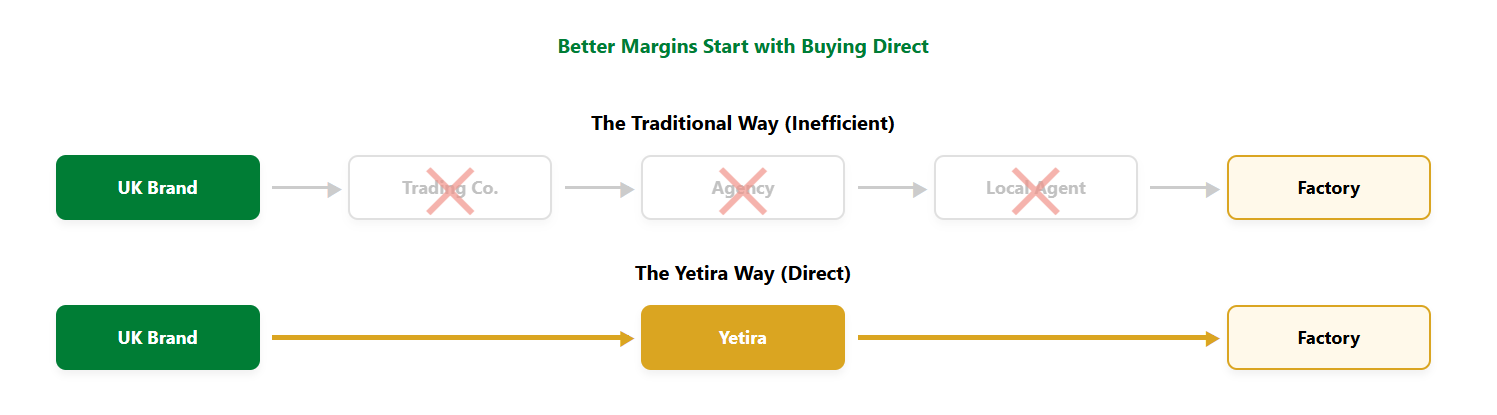
This is why sourcing home textiles from India isn’t just a logistics problem, it’s a knowledge problem. You need someone who understands the manufacturing side, knows which factories specialise in what, can evaluate quality at the source, and has the relationships to get things done when it gets complicated.
The margin advantage of sourcing directly from India is real. But you only capture it if you can cut through the layers and work with the right people from the start.