
How Small Retailers Can Source Home Textiles from India – and Actually Make It Work
Most independent gift and lifestyle retailers know they should be sourcing home textiles from India. The quality is there. The price is there. The craft tradition is real. But the logistics get in the way, and they end up back at the same wholesaler, paying two or three times the manufacturer price.
Here is how that changes.
Why Small Orders from India Don’t Work, Until Now
When a retailer orders 50 tea towels or 30 cushion covers from India individually, the freight cost per unit wipes out the price advantage. A small shipment carries its own freight, customs clearance, and handling charges, adding 30 to 50% to the landed cost per piece.
This is why most small retailers stay with local wholesalers. Not because they want to pay more, but because sourcing direct feels out of reach.
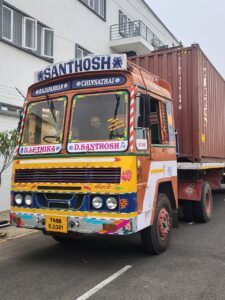
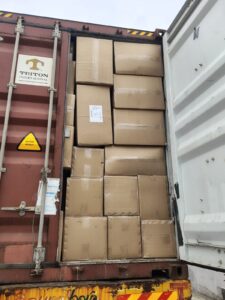
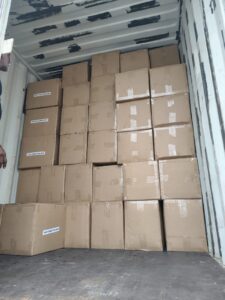
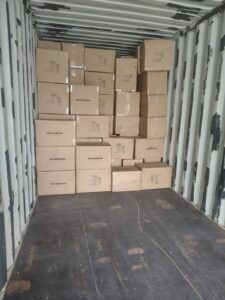
One Container. Multiple Retailers. One Delivery Each.
Look at the images in this post. That is a Full Container Load, an FCL, being loaded with home textiles from Karur, Tamil Nadu, heading to multiple independent retailers across the US and UK simultaneously.
A gift store in New York. A boutique in Chicago. An independent retailer in London. A homewares store in Manchester. Different cities, different quantities, one container.
Each retailer ordered what they needed. Together, they fill an FCL. The freight rate per unit drops dramatically, and that saving passes to every retailer in the shipment.
The container arrives at the US or UK port. Local freight forwarding partners break it down and deliver each retailer’s order directly to their store. The retailer receives their goods at their door, no customs forms, no freight coordination, nothing to manage.
Why Karur Makes This Possible
Karur accounts for around 65% of India’s home textile exports. Over 200 weaving units, 500 stitching units, 32 dyeing facilities, and 200 printing units operate within a 50-kilometre radius. Manufacturers supplying IKEA, Walmart, and Target operate from this same cluster.
When multiple retailers order from a Yetira seasonal collection, everything is produced, packed, and consolidated within the same cluster – then loaded into one container. No sourcing across multiple states. No coordination delays. One ecosystem, one shipment.
What a Retailer Gets
- Better margin – FCL rates shared across multiple orders mean lower landed cost per piece
- Manufacturer pricing – no wholesaler layers between you and the source
- Zero import complexity – Yetira handles export, customs, and last mile delivery in the US and UK
- A provenance story – Karur block print, artisan craft, genuine origin
- Fixed delivery date – orders close on a set date, goods arrive on a confirmed schedule