The Design Confidentiality Problem Nobody Talks About in Indian Manufacturing
The Moment It Starts
You spend weeks getting a design right. The print, the colours, the whole feel of it. Then it goes out for costing, because there’s no way around it: a factory can’t quote a price or plan an MOQ without actually seeing what they’re making.
And that’s the exact moment it can start slipping out of your hands.
Why This Happens
A lot of exporters in India are middlemen, not manufacturers. Your design passes through two, three, sometimes four sets of hands before it ever touches a machine. Somewhere in that chain, copies get made. Sometimes it turns up in the domestic market a few months later. Sometimes it makes a much longer trip and ends up mass produced in China, sold for a fraction of what it took to create.
You had an NDA. Great. Try enforcing that across three countries and a supply chain you can’t even fully map.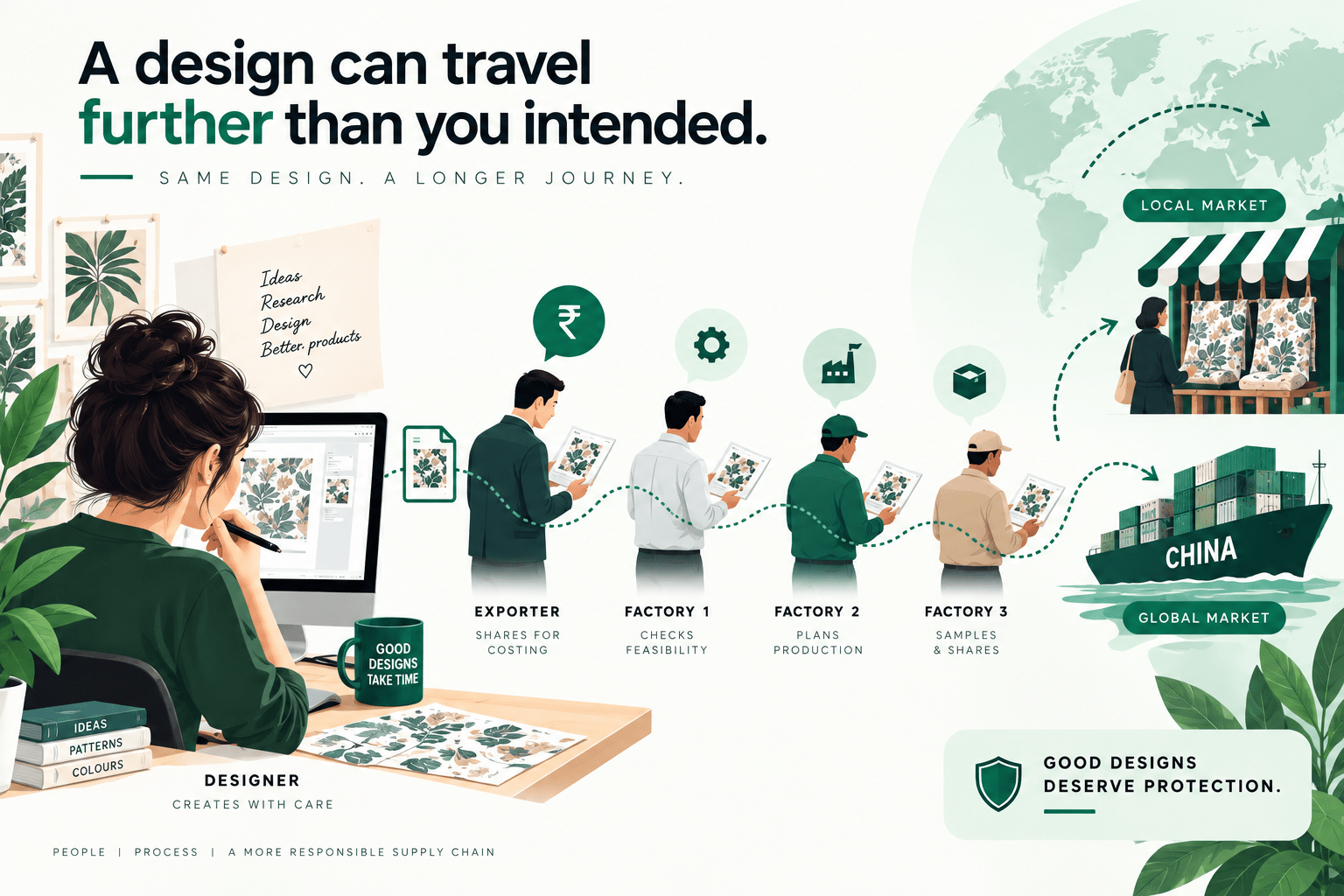
It’s Rarely Malice, It’s a Systems Problem
None of this usually comes from bad intent. It’s just what happens when nobody in the chain actually treats the file like it belongs to someone. It’s data to them, not somebody’s work.
Where We Stand
An NDA on a PDF means very little if it doesn’t reach every hand that touches the design. So we sign one with every manufacturing unit involved in actually bringing a product to life, not just the company at the top of the chain. If a factory floor two steps removed from us can see your design, they’ve signed something too.
It’s not a perfect fix. Nothing is, once a file leaves your laptop. But there’s a real difference between working with someone who treats that as your problem, and someone who treats it as theirs to protect.
What to Ask Before You Send a File
If you’re a designer thinking about manufacturing anywhere, India included, ask this before you send a single file: who actually sees this, and what happens to it once it leaves your inbox. Anyone serious about your work will have a straight answer.