
The Women Behind India’s Textile Workspaces: Quiet Strength, Real Impact
In every finished textile product, whether it’s a cushion cover, a towel, or a simple oven glove, there is a story that often goes unnoticed. It is the story of the women who work with care, precision, and consistency behind the scenes.
Across India’s textile clusters, especially in places like Karur and Tiruppur, women form a significant part of the workforce. They are involved in processes like stitching, finishing, checking, packing, and quality control, roles that demand patience and attention to detail.
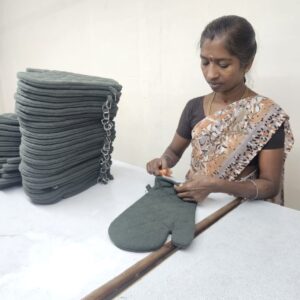
In Karur, known for home textiles and exports, many women are part of small and mid-sized production units. They handle tasks like hemming, folding, thread cutting, and final inspection. These are not just repetitive tasks, they are critical to ensuring that the product meets international expectations. A minor flaw missed at this stage can affect the entire shipment.
Tiruppur, often referred to as the knitwear capital of India, also relies heavily on women workers. From garment stitching to checking fabric consistency, women contribute to maintaining production standards across large-scale operations. In many units, women make up a substantial portion of the shop floor workforce, especially in finishing and quality roles.
What stands out is not just their presence, but the consistency they bring. Many of these women have years of experience. They may not be in decision-making roles, but they carry a deep understanding of the product and process. Over time, this builds a level of reliability that manufacturers depend on.
At the same time, their contribution goes beyond the factory. For many, this work supports their families, contributes to household income, and creates a sense of independence. In regions like Karur and Tiruppur, the textile industry has quietly enabled thousands of women to be part of the workforce in a meaningful way.
When buyers think about sourcing, the focus is often on price, MOQ, or timelines. But behind all of that is human effort, careful hands ensuring consistency, quality, and finish. Recognizing this doesn’t just add perspective; it builds a deeper sense of trust in how products are made.
Responsible sourcing is not only about systems and processes. It is also about acknowledging the people who make it possible.
And in India’s textile workspaces, women are at the heart of that effort.